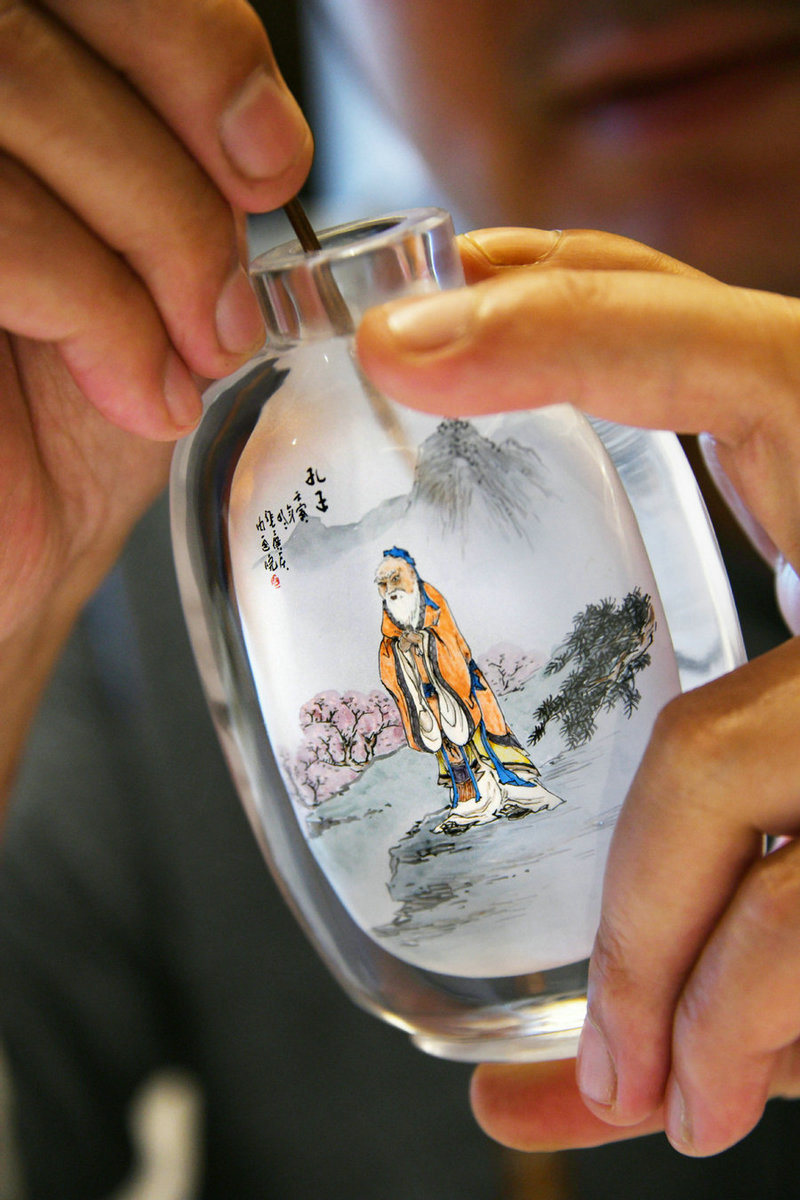
Beijing Inside-Bottle Painting
Introduction
Beijing Inside-Bottle Painting is a traditional Chinese art form renowned for its intricate designs painted on the inside surface of a bottle. This unique art technique, part of the broader category of inside-bottle painting, requires exceptional skill and patience. Artisans create elaborate images inside bottles with a narrow opening, often less than 1 cm in diameter. The subjects of these paintings commonly include flowers, birds, and natural landscapes, reflecting China's rich cultural heritage and affinity for nature. Inside-bottle painting has been recognized as a national intangible cultural heritage since 2006, highlighting its cultural significance and the meticulous craftsmanship involved in its creation. This art form not only requires technical expertise but also a profound understanding of traditional Chinese aesthetics and symbolism.
History
The art of inside-bottle painting in China dates back to the Qing Dynasty (1644-1911), a period known for its artistic innovation and appreciation of finely crafted objects. Originally, these paintings adorned snuff bottles, which were popular among the Chinese elite as containers for powdered tobacco. Snuff bottles often featured exquisite carvings on their exteriors or intricate paintings inside, making them both functional and decorative. Over time, the practice of painting inside bottles evolved from a practical craft into a revered art form. It garnered admiration for the artisans' ability to create delicate and detailed images using a limited palette and the constraints of painting through a narrow bottleneck. This evolution reflects the broader trends in Chinese art, where functional objects were often elevated to fine art status. The complex history of inside-bottle painting underscores its importance as a cultural artifact and a testament to the innovative spirit of Chinese artisans.
The craft of inside-bottle painting first flourished in Beijing but later spread to regions such as Hebei, Shandong, and Guangdong, giving rise to regional schools known as the Beijing, Hebei, Shandong, and Guangdong schools.
Techniques
The techniques involved in Beijing Inside-Bottle Painting are both complex and fascinating, requiring specialized tools and a thorough understanding of the painting process itself.
Tools and Materials
The primary tool for inside-bottle painting is a slender brush that can be maneuvered through the narrow bottleneck to reach the bottle's interior surface. These brushes are specially crafted to allow artists to paint with precision and detail. Other tools include bulb blowers to dry the bottle's interior, as well as various pigments and paints selected for their suitability for the glass surface. The choice of materials is crucial, as the paint must adhere properly and withstand the test of time without fading or peeling. Each component, from the brushes to the pigments, plays a vital role in ensuring the quality and longevity of the finished artwork.
Painting Process
The painting process begins with the careful preparation of the bottle and materials. The artist must ensure the bottle's interior is thoroughly cleaned and dried to prevent any impurities from affecting the paint. Once the surface is ready, the artist employs the slender brush to apply paint to the inside surface, working in reverse order. This means starting with the foreground details and gradually adding layers to complete the background. This technique requires the artist to have a clear vision of the final image and the ability to work meticulously within the constraints of the bottle's shape and size. The process is time-consuming and demands a steady hand, intense concentration, and a deep understanding of perspective and color blending. Each stroke must be carefully applied to achieve the desired effect, resulting in a miniature masterpiece within the confines of the bottle.
Artistic Features
The themes of inside-bottle paintings often include historical scenes, landscapes, mythology, and calligraphy, showcasing the depth of Chinese cultural and artistic heritage. The meticulous craftsmanship, combined with the miniature scale, makes these bottles valuable both for aesthetic appreciation and cultural research
Cultural Significance
Beijing Inside-Bottle Painting holds significant cultural value as a representation of traditional Chinese artistry and craftsmanship. It symbolizes the intricate beauty and harmony found in nature, which are central themes in Chinese culture. The art form also reflects the values of patience, precision, and creativity. As a recognized national intangible cultural heritage, inside-bottle painting continues to be an important cultural and artistic legacy, celebrated for its unique contribution to the world of art and craft.
Originally, these bottles served as luxurious accessories for the nobility, including members of the imperial court, aristocrats, and high-ranking officials. Beyond their functional use for storing powdered tobacco, inside-painted bottles became collectibles and symbols of status. They also reflect a blend of Chinese and Western artistic traditions, incorporating techniques like carving, inlay, and filigree alongside traditional painting.
Preservation and Promotion
Efforts to preserve and promote Beijing Inside-Bottle Painting involve a combination of government support, educational initiatives, and community engagement. Recognized as a national intangible cultural heritage, the art form benefits from programs aimed at safeguarding traditional crafts. Art schools and workshops offer training to new generations of artisans, ensuring the continuity of this artistic tradition. Additionally, artists like Sun Zhicheng contribute to the promotion of inside-bottle painting through modern platforms such as social media, reaching new audiences and inspiring interest in the art form. These efforts highlight the importance of preserving cultural heritage while adapting to contemporary contexts, ensuring the survival and relevance of Beijing Inside-Bottle Painting for future generations.








